Why Stiffness After Rest Matters!
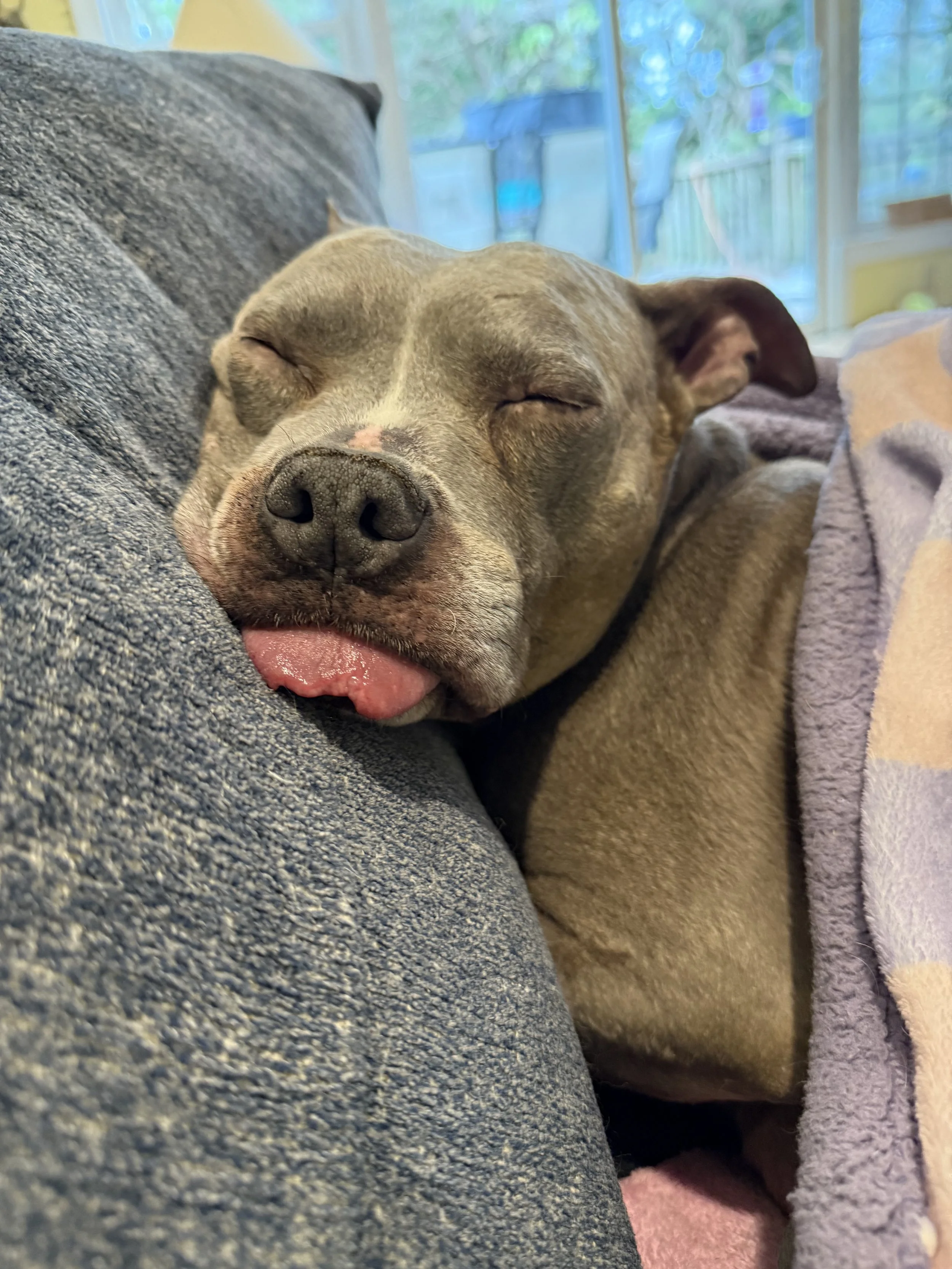
AARF kiddo- Tardis taking a well deserved rest break
The quiet early signs your pet’s body needs support!
Welcome to December! As the days get colder, you may begin to notice your dog struggling more to get up after a nap or take a few stiff steps after lying down. You, yourself may be having more trouble too!
It’s easy to chalk that up to them" “getting older”-but stiffness after rest is an important early clue that your pet’s body is asking for help.
Whether your companion is a senior, an athlete, or recovering from an injury, stiffness is the body’s way of saying “Something isn’t moving the way it should”
Let’s break down why it happens, what it means, and how rehab can make a big difference!
Overnight (or after long rest)= cold muscles + slowed circulation
Just like humans, pets experience reduced blood flow and muscle warmth during sleep or prolonged rest. This is because the body hasn’t been moving and muscles tighten up! There’s less fluid in the joints and muscles aren’t moving as well as they are when warmed up!
But when there’s:
arthritis
joint inflammation
muscle tightness
previous injury
compensations…
…the body has a harder time “warming up” again. That stiffness is the body’s way of protecting areas that don’t feel stable. You may notice your dog having a harder time getting moving again. What once used to take a few steps to “loosen up” now may be taking longer. It may even begin to affect their entire ability to change position or get up successfully!
Stiffness is an early sign of joint changes
While it’s not uncommon to have to take a few moments to get up and get. moving, as pets age this process can become worse. Especially when they have joint changes such as arthritis. Issues such as:
OA
Hip or elbow dysplasia
spinal discomfort or issues
muscle overuse
or a compensation pattern brewing
can also lead to increased issues with stiffness in the am and often a pet’s body begins to demonstrate stiffness long before they show consistent limping.
This is often due to decreasing flexibility, joint related changes such as decreasing lubricating fluids and/or degenerative changes and breakdown in cartilage offering joint protection and cushioning.
The first 5-10 steps tell a big story
When watching a dog move in the clinic (or even my own aging guys) I am not only watching how they get into and out of positions, I’m also monitoring what happens in those first few moments after they stand up.
Are they slow or hesitant?
Do they “warm out of it” after a few steps?
Are their back legs closer together or wide apart?
Are they shifting their weight?
Is the stride even?
Do they pause before moving/ are hesitant?
These tiny details can reveal big issues and if the body is asking for more support!
How Rehab Can Help
While morning stiffness isn’t uncommon, it’s a sign that your dog could benefit from early intervention before it becomes a problem! Especially if you notice the accompanying trouble getting up, longer time to move, etc. This phase is when rehab can truly create magic for you and your pet!
Before chronic pain appears
Before muscle loss begins,
Before compensations take over!
Rehab addresses issues like stiffness by focusing on
Modalities to address inflammation
Manual therapy to release tight muscles
Strengthening exercises to improve joint support
Balance and proprioception training and movement retraining to restore confidence
Home hack education
As pets build strength, stability, and flexibility their stiffness and movement issues decrease and they can move easier!
Big Picture
Stiffness after rest isn’t something to ignore—it can be a quiet whisper of discomfort before they body begins to shout! With the right support, your pet can:
move more comfortably
maintain muscle flexibility and strength
reduce inflammation in joints
feel more like themselves again!
You can help your pet by watching for signs of:
Difficulty rising up after naps
Stiffness than lasts more than 5-10 steps
“Warming out of it” but constant recurring and warming period getting longer
Slow to lie down or reposition
Audible signs (especially getting louder” like heavy sighs, grunts, puffing
Getting up slower
Your 'pet’s body is always communicating! Our job is to LISTEN and then help guide them into healthier, happier, motion!
Contact us to book a consultation or learn more about how physical therapy can make all the difference for your dog’s mobility.
Because your pet deserves comfort, connection, and a body that supports the beautiful life they’re here to live!