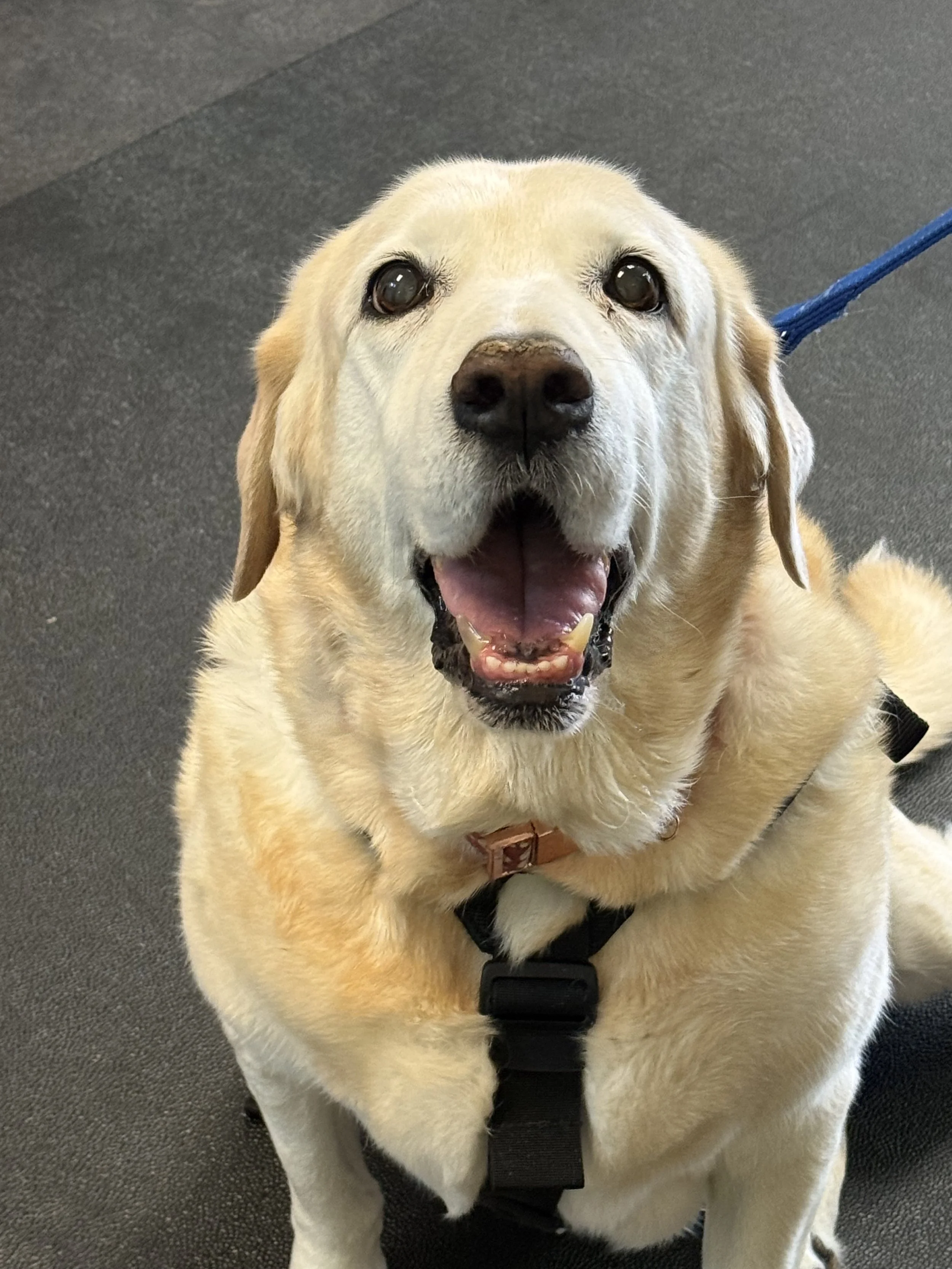
Our Aligned ARF, LLC Kiddo of the week—Precious Lucky! He’s an older gentleman managing not one but BOTH CCL injuries! Mom and Dad are looking to getting him as comfortable as possible and back to moving as best as he can!
Healing isn’t one-size-fits-all! Sometimes surgery isn’t an option, but now what?!
Your dog has been diagnosed with a cranial cruciate ligament (CCL) injury and suddenly you’re facing questions about surgery, rehabilitation, activity restrictions and trying to figure out what comes next?!
If you’re considering conservative care or have been told your dog isn’t a candidate for surgery, you may wonder: Does that mean rest? A brace? Exercises?! Can my dog still enjoy life?!?!
What does “conservative management” even mean?!
While surgery is often the preferred treatment choice since it addresses the instability of the knee joint, it is not always the best option for your kiddo. Issues such as financial concerns, age or comorbities of your kiddo can dictate the plan. Conservative management basically means that the plan for treating an injury or issue is to go forward without surgery. For a CCL injury, it generally combines veterinary pain management, activity modification, weight management when needed, and rehabilitation. A brace may be considered in some cases too. The goal is to improve comfort and everyday function while managing the effects of an injured ligament.
Is it appropriate for every dog?
NO. The decision largey depends on factors such as the severity of the injury, body size, activity level, family circumstances, overall health and age of your kiddo.
Surgery is typically the recommended plan of action when faced with a CCL injury, especially with a complete rupture, since it allows for more stability of the knee and less complications down the road such as reinjury. There is also a better chance at returning to previous life or things like sports with the surgery route. However, conservative management may be considered when surgery is not an option or part of your veterinarian-guided plan for your kiddo. An orthopedic consultation can also help clarify choices or decisions.
Families deserve clear information and compassionate support as you navigate this decision as either option has it’s risks and long-term recovery paths.
What does a conservative plan involve?
1.) Managing pain and comfort
Pain management belongs at the center of any plan but especially with CCL injuries. Your veterinarian can help you determine which medications or other treatments are appropriate and how to monitor your dog’s response. This is also a first step in our rehabilitation plan and goals. Through the use of modalities and manual therapies we can help address pain and work towards more comfortable movement. Basically it’s like the saying goes—we have to calm it down before we build it up!
2.) Giving activity a clear structure
“Take it easy” can be difficult to interpret when your dog wants to chase a squirrel or go back to jumping on the couch. Make sure you ask your care team for specific guidance about leash walks, bathroom trips, play etc. Early management commonly restricts activity and especially no jumping, running, stairs, or uncontrolled activity. This is due to a few reasons but basically your dog has lost it’s main stabilizer in their knee and these high impact and explosive activities can not only delay recovery but also set them up for more issues or injury. Exercise and activity progresses according to your dog’s response and reassessments-not just Because a certain number of days has passed but overall recovery can require 6+ -12+ months of managed activity.
3.) Making your home easier to navigate
Everyday surroundings and keeping your kiddo safe at home are a big part of the plan. Things like getting up and down now require a bit more effort and some things that used to be easy for them are now not only harder but can be more dangerous to their recovery. Helpful changes can include:
Non-slip rugs or runners along frequently used routes
Gates to manage furniture and stair access
A comfortable resting area on one level
A plan for safely getting in/out of the car
The goal is to reduce risk of slipping, jumping, and unexpected demands on a painful, weak, unstable limb.
4.) Addressing body weight when needed
If your dog carries excess weight, a good nutrition plan is a crucial part of their care. A lean body condition reduces the load placed on their joints and makes it easier to get around. Weight management should be appropriate to your dog’s needs and health and discussed with your vet.
5.) Rehabilitation
Rehabilitation considers how your dog walks, bears weight, moves their joings, and uses their muscles. Exercises are selected and progressed to support their body needs and help get them moving, building muscle to support their knee, and addressing compensatory changes
What about a knee brace?!
A properly fitted brace may be an option for some dogs but not all. It also requires professional assessment, fitting, and follow up as issues such as wounds or other skin issues can develop. Plus if the fit is not correct for your dog, it won’t work to support and stabilize the joint which is the whole point in the first place! Evidence for canine CCL bracing remains limited and a brace isn’t a guarantee substitute for surgery or a stand-alone solution.
How do we know it’s working?!
Agree on practical goals with your care team such as more comfortable daily movement, improved use of the leg, and better participation in appropriate activities. While things like comorbities can affect prognosis dogs do improve with nonsurgical treatment but face lasting issue of joint instablity. The complete tear won’t recover into normal ligament tissue and the kiddos are forced to rely on fibrotic tissue and muscle compensations to help protect the knee. Therefore, small and low-activity dogs typically have a higher success rate. It is important to monitor your kiddo’s activity levels and understand what to watch out for long term. There is no standard answer to if they can heal without surgery. The bigger question is can they acheive comfort, quality of life, and function going the conservative route. Through partnership with your vet, rehabilitation team, you can better understand your dog’s movement needs and ways to support them helps set them for their best chance.
Contact us to book a consultation or learn more about how physical therapy can make all the difference for your dog’s mobility.
Because your pet deserves comfort, connection, and a body that supports the beautiful life they’re here to live!
Also stay tuned for more information about a space created to explore the deeper partnership between humans and animals. The way they mirror us, the way they teach us, and the healing that can flow both directions.